Unification Is Not What You Think It Is
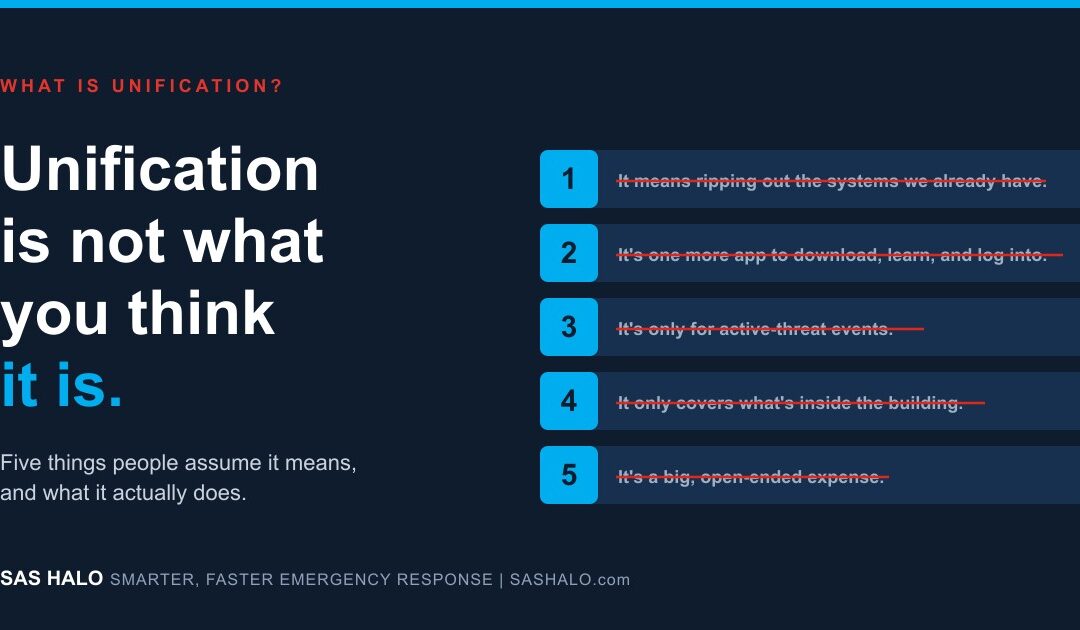
What is unification? Five things people assume it means, and what it actually does.
You’ve probably heard the word. Here are five things people assume it means, and what it actually does.
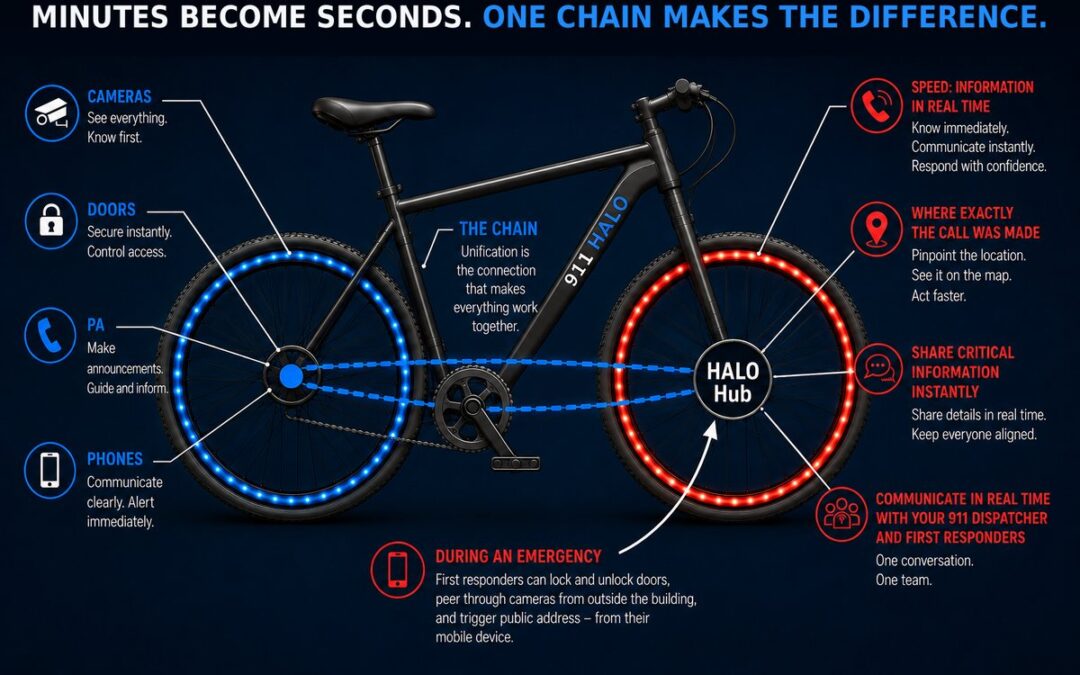
The one-sentence definition: Unification connects the security systems your school already owns so they respond together, in seconds.
Myth 1: “It means ripping out the systems we already have.”
The truth: Unification keeps your cameras, door locks, PA, and phones. It doesn’t replace them, it makes them work for you.
Myth 2: “It’s one more app to download, learn, and log into.”
The truth: No app to download. The web app opens without a password for the people named in your School Safety Plan, and for first responders.
Myth 3: “It’s only for active-threat events.”
The truth: It’s built around your full safety plan: fire, severe weather, medical emergencies, evacuations, and drills.
Myth 4: “It only covers what’s inside the building.”
The truth: Playgrounds, fields, parking lots, and grounds are covered too. Every call shares caller ID and a precise on-campus location.
Myth 5: “It’s a big, open-ended expense.”
The truth: One-time integration of $12K and an annual 911 HALO license of $8K, on your AEPA contract. First responders pay nothing.
The Result: From Minutes to Seconds
Without 911 HALO: minutes. Each system takes its own call. Someone has to notice, call, describe the location, and wait.
With 911 HALO: seconds. One call anywhere on campus shares caller ID, exact location, live camera feeds, and door access instantly.
Ready for more? SAS VIEW and Syght are available as add-on options for vision AI and early threat detection.
Still think unification is complicated?
See it on your own campus. We’ll show you how it connects the systems you already have.